When asphalt begins to crack, fade, or shift, many property owners worry about the cost and downtime of major repairs or full replacement. The good news is that asphalt milling offers a cost-effective and eco-friendly solution.
Instead of tearing everything out, milling removes the damaged top layer of asphalt, preparing the surface for a new overlay. The removed material is collected, recycled, and reused, making it a cost-effective and eco-friendly process.
Milling delivers clear advantages:
- Cost savings compared to full reconstruction
- Sustainability through recycling old asphalt
- Better performance with smoother, safer surfaces
In this guide, we’ll cover the asphalt milling process, why it matters, and best practices for long-term results. Understanding this process can help you make informed decisions about the parking lots and pavement surrounding your business.
Table of Contents
What Is Asphalt Milling?
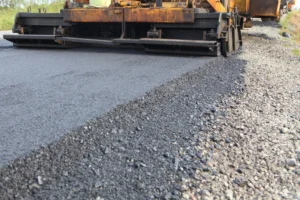
Asphalt milling is a pavement repair process that saves time and money by reusing existing materials. Using large milling machines, contractors grind away the damaged top layer of asphalt to a set depth.
This creates a smooth, even surface that’s ready for repaving. The removed asphalt, called millings, is collected and recycled for resurfacing. This makes the process both efficient and environmentally friendly.
Commercial paving milling is often used to prepare the pavement for overlays, full-depth repairs, or other pavement rehabilitation projects.
Why Asphalt Milling Matters
Asphalt milling plays a key role in extending the life of roads, parking lots, and other paved areas. Choosing milling instead of reclamation saves money, reduces waste, and creates safer surfaces.
Environmental Benefits
One of the most significant advantages of pavement milling is sustainability. The process recycles existing asphalt, reducing the need for new raw materials and lowering landfill waste. This makes it a greener choice compared to full replacement.
Cost Efficiency
Milling is far less expensive than tearing out and rebuilding pavement from the ground up. It allows crews to fix surface issues while preserving the stronger base underneath, saving on both materials and labor.
Improved Surface Quality
A freshly milled surface creates the perfect foundation for overlays or new asphalt. This results in a smoother, more even ride for vehicles and safer walkways for pedestrians.
Preserving Infrastructure
By removing only the top layers, milling protects the structural integrity of the pavement’s foundation. This ensures long-term durability and reduces the frequency of major repairs.
Step-by-Step Asphalt Milling Process
The asphalt milling process has clear steps that make the work safe, quick, and built to last.
- Site Assessment and Planning
Crews inspect the pavement to identify damage, drainage needs, and proper milling depth. Careful planning helps the project run smoothly and ensures accurate results.
- Machine Setup and Preparation
Specialized milling machines are calibrated and positioned for efficient work. Safety measures and traffic control are also implemented before milling begins.
- Milling Action
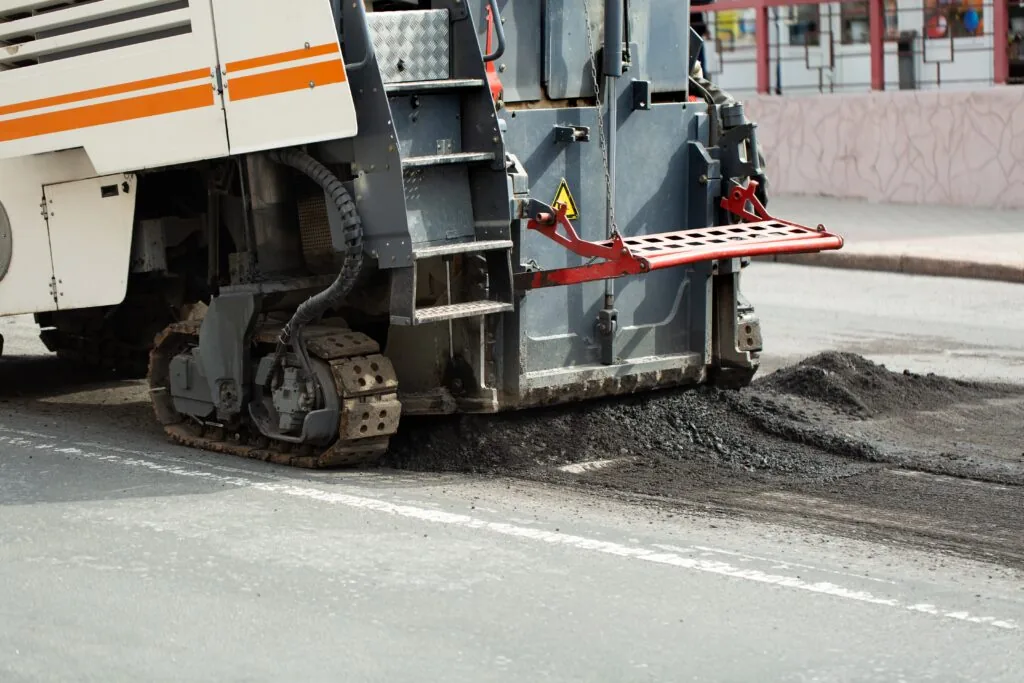
Milling machines use a rotating drum with sharp metal teeth to grind the asphalt into small pieces. Operators adjust the depth so only the right amount of surface is removed.
- Material Handling
As the asphalt is milled, conveyors move the pieces into waiting trucks. These millings are taken away to be recycled and reused in future paving projects.
- Surface Cleanup
After milling, crews sweep and clean the surface to clear away leftover debris. A clean work area ensures the pavement is ready for an overlay or other repairs.
- Overlay or Repair Application
The final step is installing new asphalt or performing repairs. This creates a smooth, durable surface that extends the life of the pavement.
Equipment and Machinery Used in Milling
The success of any asphalt milling process depends heavily on the right equipment. Modern milling technology allows contractors to complete projects faster, safer, and more accurately.
- Asphalt Milling Machines
Milling machines use big rotating drums with sharp teeth to grind up old pavement. Smaller machines fit tight areas, while larger ones are used for highways and big parking lots.
- Supporting Equipment
Other tools help the job run smoothly. Sweepers clear debris, water trucks keep dust down, and dump trucks carry away the asphalt millings. These keep the site clean and safe.
- Advanced Technology
Modern machines use tools like GPS and automated depth controls. This makes milling faster and leaves a smooth surface ready for repair or overlays.
Common Pavement Issues Resolved by Milling
Asphalt milling is a proven way to tackle some of the most common pavement issues.
Cracking (Alligator Cracks, Fatigue Cracking)
When cracks spread across the pavement, it often signals damage beyond the surface. Milling removes these weakened layers, allowing new asphalt to be installed on a stable base.
For smaller cracks that don’t require milling, asphalt crack filling can be used as a preventive maintenance service. Milling is typically reserved for more extensive surface-level damage.
Rutting and Surface Wear
Heavy traffic can cause depressions or grooves in asphalt over time. Milling restores an even grade, eliminating these ruts and creating a safer driving or walking surface.
Drainage Problems
Poor drainage leads to standing water, which accelerates pavement deterioration. Milling adjusts surface grades so water flows correctly into drains or catch basins, protecting the pavement foundation. For projects needing extra reinforcement, soil stabilization may also be recommended.
Rough Ride Quality and Uneven Grades
Uneven pavement creates an uneven surface and increases wear on vehicles. Milling smooths the surface, eliminating bumps and dips so overlays can provide a consistent finish.
Best Practices for Asphalt Milling
Getting the best results from the asphalt milling process requires proper planning, skilled crews, and attention to detail. These best practices ensure quality work and long-lasting pavement performance:
- Proper Project Assessment and Planning
Before milling begins, a thorough site evaluation determines the correct depth, areas of concern, and drainage adjustments. Clear planning prevents costly mistakes.
- Choosing the Right Milling Depth
Not all projects require full-depth removal. Determining the right milling depth helps balance cost and effectiveness.
- Ensuring Operator Training and Machine Calibration
Milling machines must be calibrated to the correct settings. Experienced operators ensure precision and safety throughout the project.
- Effective Cleanup and Compaction
After milling, crews must sweep the surface and compact it properly to prepare for overlays or repairs. Clean, stable surfaces are essential for long-term durability.
- Protecting New Pavement with Maintenance
Ongoing care, such as parking lot repair and pothole patching, helps extend the life of the newly paved surface.
Extend the Life of Your Surface With Asphalt Milling Services from PKS Paving
Asphalt milling is an affordable and eco-friendly step to repair pavement without replacing it. It enhances ride quality, improves safety, and provides lasting value for property owners.
With best practices and the right team, PKS Paving makes sure every milling job is done right. We’re dedicated to saving money, protecting infrastructure, and keeping surfaces smooth and safe for years to come.
For expert service and reliable results, contact PKS Paving today.