Asphalt sealcoating is a proven way to protect and extend the lifespan of paved surfaces. But what is sealcoating, and how does it make such a difference for your property?
Sealcoating adds a protective layer to asphalt paving, shielding it from the sun, water, chemicals, and daily traffic. It not only improves durability but also gives pavement a smooth, uniform appearance that boosts curb appeal.
As a property or facility manager, knowing how sealcoating works helps you make smarter decisions about protecting your pavement. This asphalt sealcoating guide explains what sealcoating is, how it’s applied , and why it’s one of the best ways to get the most out of your investment.
Table of Contents
What Is Asphalt Sealcoating?
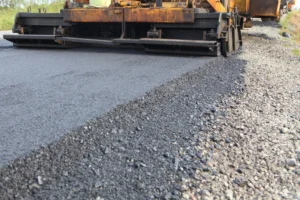
Asphalt sealcoating is the process of applying a protective liquid coating to pavement. The coating acts as a shield, slowing down wear and tear from weather and heavy traffic. It also restores the shiny, black finish of new asphalt.
Three main types of sealers are commonly used:
- Bitumen-Based Sealers – Traditional petroleum sealers that create a tough, water-resistant layer.
- Polymer-Modified Sealers – Blended with polymers for extra strength, flexibility, and resistance to heavy use.
- Acrylic Sealers – Eco-friendly, quick-drying options that provide strong UV protection and minimal downtime.
The best sealer depends on how the surface is used, your budget, and how long you want it to last. For example, busy parking lots often need the strength of polymer-modified sealers, while lighter-use areas may do well with bitumen-based products.
Why Is Asphalt Sealcoating Important?
You may already handle crack filling and repairs as part of routine maintenance, but sealcoating goes a step further. It’s a preventive measure that shields asphalt from future wear and damage.
Sealing the surface helps prevent cracks, potholes, and surface breakdown before they appear. This keeps pavement safer, longer-lasting, and reduces repair costs over time.
Here’s why sealcoating is important:
- Protection from Water Damage – Asphalt is naturally porous. Without a seal, rain and melted snow can seep in, weaken the base, and create cracks or potholes.
- UV Defense – Sunlight dries out asphalt and makes it brittle. Sealcoating blocks UV rays and prevents asphalt from drying out.
- Chemical Resistance – Sealcoating creates a barrier against harmful oils, gas, and other spills.
- Longer Pavement Life – With a protective layer in place, asphalt can last years longer before major repairs or replacement are needed.
- Improved Appearance – A fresh black finish makes pavement look smooth, clean, and well-kept.
- Cost Savings – Sealcoating is far less expensive than large-scale repairs or replacement.
Unprotected vs. Sealcoated Asphalt
| Feature | Unprotected Asphalt | Sealcoated Asphalt |
| Lifespan | 10–15 Years | 25–30 Years |
| Appearance | Gray, weathered, porous | Smooth, deep black finish |
| Resistance | High vulnerability to oil/gas | Shielded from chemical spills |
| Total Cost | High (due to frequent repairs) | Low (preventative maintenance) |
How Sealcoating Works & What It Does
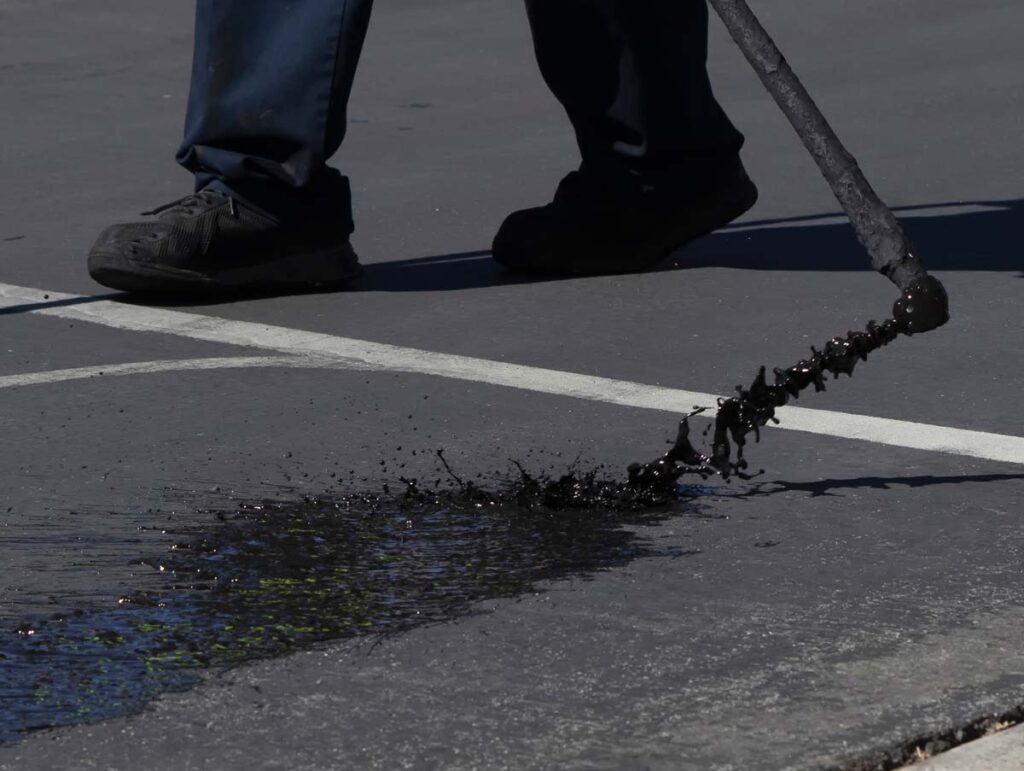
Now that you know what sealcoating is, it’s helpful to understand how it works. The material is applied as a liquid and spread evenly across the asphalt with sprayers or squeegees. Once it cures, it forms a thin, protective layer for pavement.
Here’s what the protective layer does:
- Slows Down Wear – Shields asphalt from water, sunlight, and constant traffic.
- Strengthens the Surface – Fills in small voids, creating a smoother and more durable finish.
- Improves Safety – Fresh sealcoat makes line striping brighter and more visible to drivers and pedestrians.
- Resists Spills – Protects against oil, gas, salt, and de-icing chemicals.
- Restores Appearance – Brings back a dark, uniform look that makes pavement appear clean and well-kept.
Common Mistakes To Avoid
Asphalt sealcoating is a wise investment, but only if it’s done correctly. DIY asphalt sealcoating may look like a cost-saving option, but without the right tools, materials, and preparation, it can lead to expensive problems down the road.
Here are some of the most common mistakes property owners make:
- Insufficient Surface Preparation – Failing to clean dirt, debris, and oil stains prevents the sealer from bonding properly. Always start with a clean, dry surface.
- Incorrect Application Rate – Too much sealer can cause tracking and peeling, while too little won’t provide adequate protection. Follow proper manufacturer guidelines.
- Using the Wrong Type of Sealer – Not all sealants work for every situation. For example, a driveway sealcoating product may not hold up in a heavy-use parking lot.
- Ignoring Weather Conditions – Applying sealcoat when it’s too cold, too hot, or before rain can lead to poor curing.
- Skipping Crack and Pothole Repairs – Sealcoating is a surface treatment, not a structural fix. Cracks and holes need to be repaired first for lasting results.
- Rushing the Drying/Curing Process – Driving on fresh sealcoat too soon can leave ruts and damage the finish. Allow proper curing time before reopening to traffic.
Pro Tips for Best Results
Follow proven practices to maximize the benefits of asphalt sealcoating.
- Choose the Right Sealer – Match the type of sealer to your traffic levels and climate.
- Measure Coverage Accurately – Calculate how much product you need before starting so you don’t run short or overapply.
- Maintain Equipment – Clean and check sprayers, squeegees, or tanks to prevent clogs and uneven application.
- Mix Thoroughly – Stir the sealer until it’s smooth and consistent for an even coat.
- Use Additives Carefully – Additives can improve durability or drying time, but too much can weaken the mix.
- Watch the Weather – Apply a sealcoat when temperatures are above 50°F and rain isn’t expected for at least 24 hours.
- Handle Safely – Use pumps or transfer systems to move sealer without spills.
- Apply in Thin Coats – Two light coats are stronger and last longer than one heavy coat.
- Store Leftovers Properly – Keep sealed containers in a cool, dry place to use later.
- Buy in Bulk for Large Jobs – It reduces costs and helps maintain a consistent finish.
When To Call in Professionals
DIY asphalt sealcoating may seem cost-effective, but it often falls short without the right tools, materials, and experience. Professional asphalt maintenance includes:
- High-Quality Equipment – Industrial sprayers and mixing tanks ensure even application.
- Skilled Techniques – Crews know how to handle surface prep, crack filling, and correct coverage rates.
- Time Savings – A professional team can complete large areas quickly with minimal disruption.
- Long-Term Value – Proper installation means the coating lasts longer, reducing the need for frequent touch-ups.
If you manage a commercial lot, roadway, or any high-traffic surface, hiring experts helps avoid costly mistakes and ensures a polished finish.
Cost Considerations
The average cost of asphalt sealcoating depends on factors such as region, pavement size, and the type of sealer used.
Typically, DIY sealcoating is cheaper upfront, but it comes with hidden costs. You’ll need to buy tools and equipment, and store-bought sealers are usually lower quality, meaning the results won’t last as long.
Professional asphalt sealcoating services cost more upfront, but they include premium materials, skilled application, and specialized equipment. A professionally applied sealcoat typically lasts two to three years, which helps reduce long-term expenses.
Maintenance & Recoating Frequency
Now that you’ve answered “what is sealcoating?”, the next step is knowing how often it should be applied.
Sealcoating isn’t a one-time solution — most asphalt surfaces need recoating every 2–3 years, depending on traffic and weather conditions. Maintaining sealcoating frequency helps asphalt stay strong, safe, and visually appealing.
To keep your pavement in top shape:
- Inspect your pavement twice a year for cracks, oil spots, or standing water.
- Schedule sealcoating in the spring or summer for optimal curing conditions.
- Repair potholes and cracks before applying a new coat for maximum protection.
Frequently Asked Questions
How long does sealcoating last?
Sealcoating typically lasts 2–3 years, depending on traffic and weather conditions. High-use lots or extreme climates may require more frequent recoating.
How long before it can be driven on?
Fresh sealcoat needs 24-48 hours to fully cure before reopening to foot or vehicle traffic.
Can I seal cracks myself?
Small cracks can be filled with asphalt crack filler, but larger cracks or potholes should be handled by professionals before sealcoating.
Best season for sealcoating?
The best weather conditions for sealcoating occur in late spring through early fall, when it’s generally warm and dry. These conditions allow the sealer to cure properly and last longer.
Is there a downside to sealcoating a driveway?
The only downside is improper application. If the surface isn’t repaired first, or if too much sealer is applied, it can cause problems and even shorten the life of the asphalt.
Protect Your Asphalt With Professional Sealcoating
If you’ve been wondering “what is sealcoating” and how it can benefit your pavement, PKS Paving has the answer. Our professional asphalt maintenance services protect against damage, extend the life of your surface, and keep your property looking its best year after year.
From parking lot repair to driveway replacement and pothole repairs, our team delivers proven results that last.
Don’t wait for small issues to become costly repairs — schedule an asphalt sealcoating service today.